1. Bridging Natural Language to Enterprise Systems
The primary roadblock preventing enterprises from integrating AI into core operational databases has historically been non-determinism: if a system cannot guarantee that an extracted invoice will always produce valid JSON with typed numeric fields, engineers cannot connect the model directly to SAP, Salesforce, or automated banking ACH protocols.
OpenAI solved this via Structured Outputs (constrained decoding) and robust Function Calling (Tool Calling). Instead of asking the model to "please write valid JSON," the inference engine masks out token logits that would violate the supplied JSON Schema, providing mathematical certainty that generated outputs conform 100% to schema definitions.
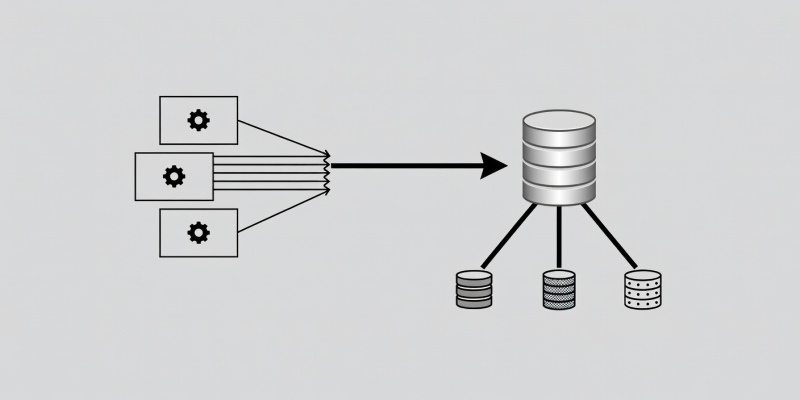
2. Tool Calling vs. Manual Text Extraction
| Execution Metric | Legacy Regex / Freeform Prompting | OpenAI Structured Outputs / Tools |
|---|---|---|
| Schema Adherence | ~85%–92% (Regular JSON parse errors) | 100% (Enforced by Constrained Token Masking) |
| Type Safety | Weak (Numbers often emitted as strings) | Strict (Enforced booleans, integers, enums) |
| Database Direct Write | Requires extensive sanitize/retry middleware | Directly pipeable to SQL / REST endpoints |
| Parallel Execution | Manual sequential chain | Native multi-tool call dispatch |
3. Advanced Reasoning: When to Deploy o3-mini
Not all workflows are linear. In scenarios requiring complex routing logic—such as evaluating multi-tiered procurement approvals against cross-border tax compliance—standard autoregressive models can jump to conclusions prematurely.
OpenAI's o3-mini and o1 models employ test-time compute (reinforcement learning reasoning chains). They think before generating tokens, systematically validating business rules against edge cases before emitting tool parameters. For critical enterprise workflows, o3-mini offers superior competitive logic at a fraction of full-scale flagship costs.
4. Event-Driven Architecture: Asynchronous Webhook Integration
Production AI workflows must not block end-user HTTP connections. The recommended enterprise pattern implements asynchronous job queues:
- Ingestion: Incoming email or customer request hits an API gateway and registers a task in a Redis or RabbitMQ queue.
- Worker Inference: Background workers dispatch the prompt with defined tools to OpenAI APIs.
- Schema Compilation: The model generates the verified function parameters.
- Execution & Audit: The worker script executes the database mutation, writes to an audit log, and notifies the supervisor.
5. Trade-Off Analysis: Autonomous Tool Execution
System Benefits
- Replaces thousands of brittle regex parsing scripts with single schema definitions.
- Reduces manual data entry time by up to 90% across procurement pipelines.
- Guarantees strict enum values for clean downstream database inserts.
- Multi-tool execution enables the model to fetch data and write results in one turn.
System Risks
- Accidental execution of destructive operations if read/write permissions are not strictly segregated.
- Extended reasoning time on o-series models may exceed standard synchronous HTTP timeout limits (e.g. 30 seconds).
- Requires comprehensive idempotency keys on all target microservices to avoid double mutations.